Holocaust Memorial, Brno
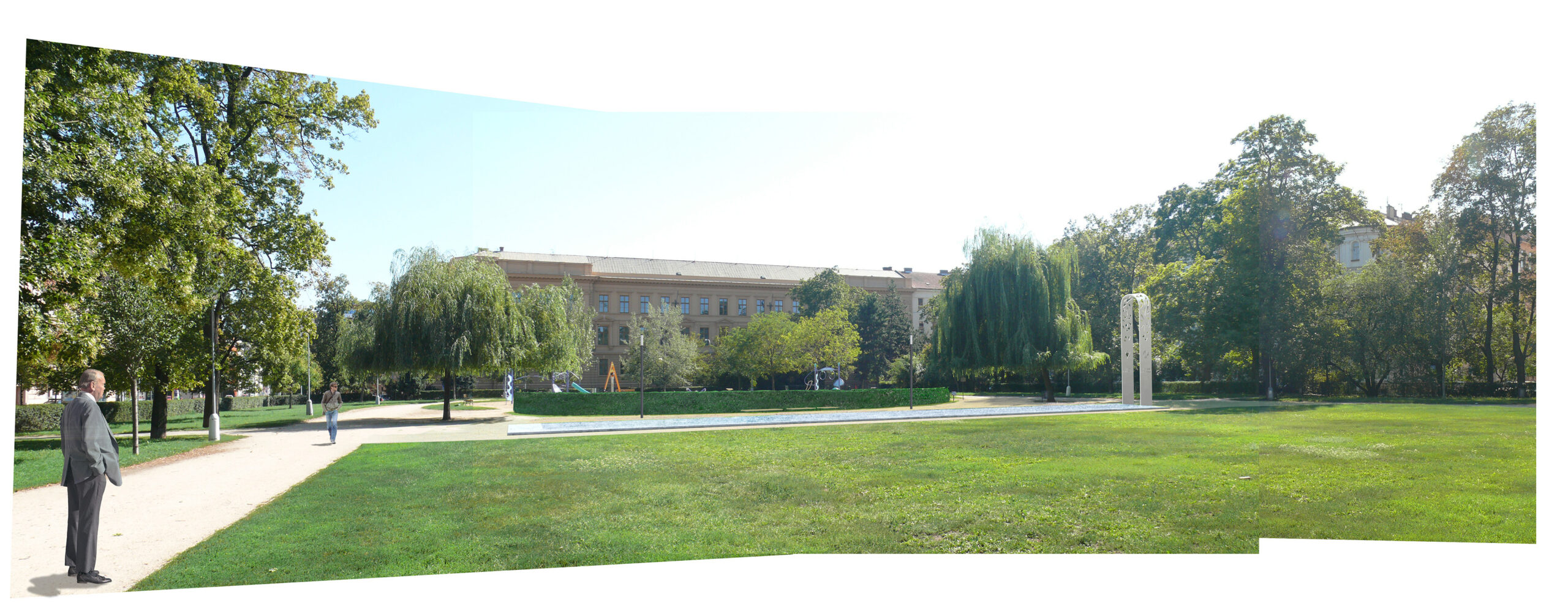
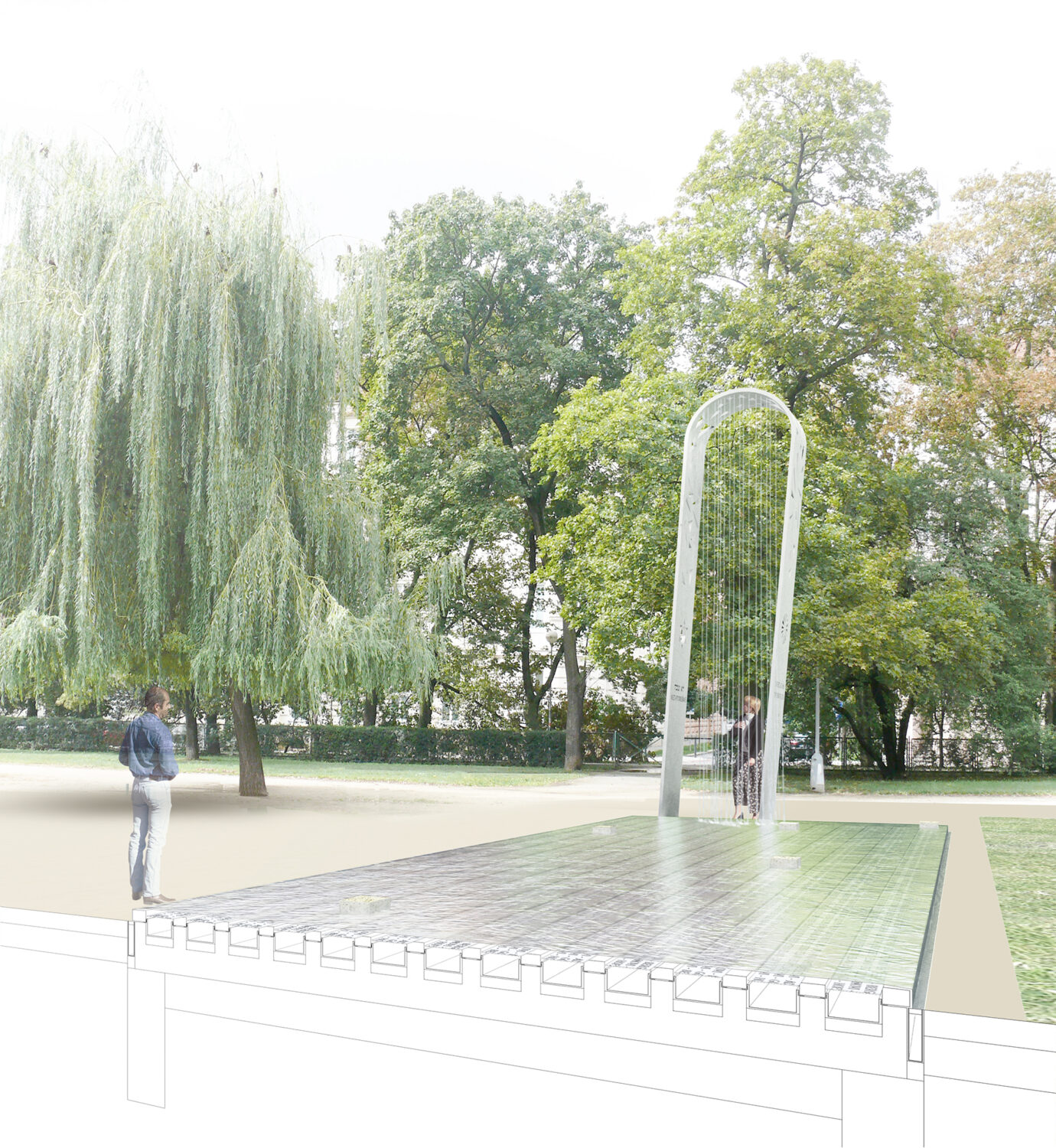
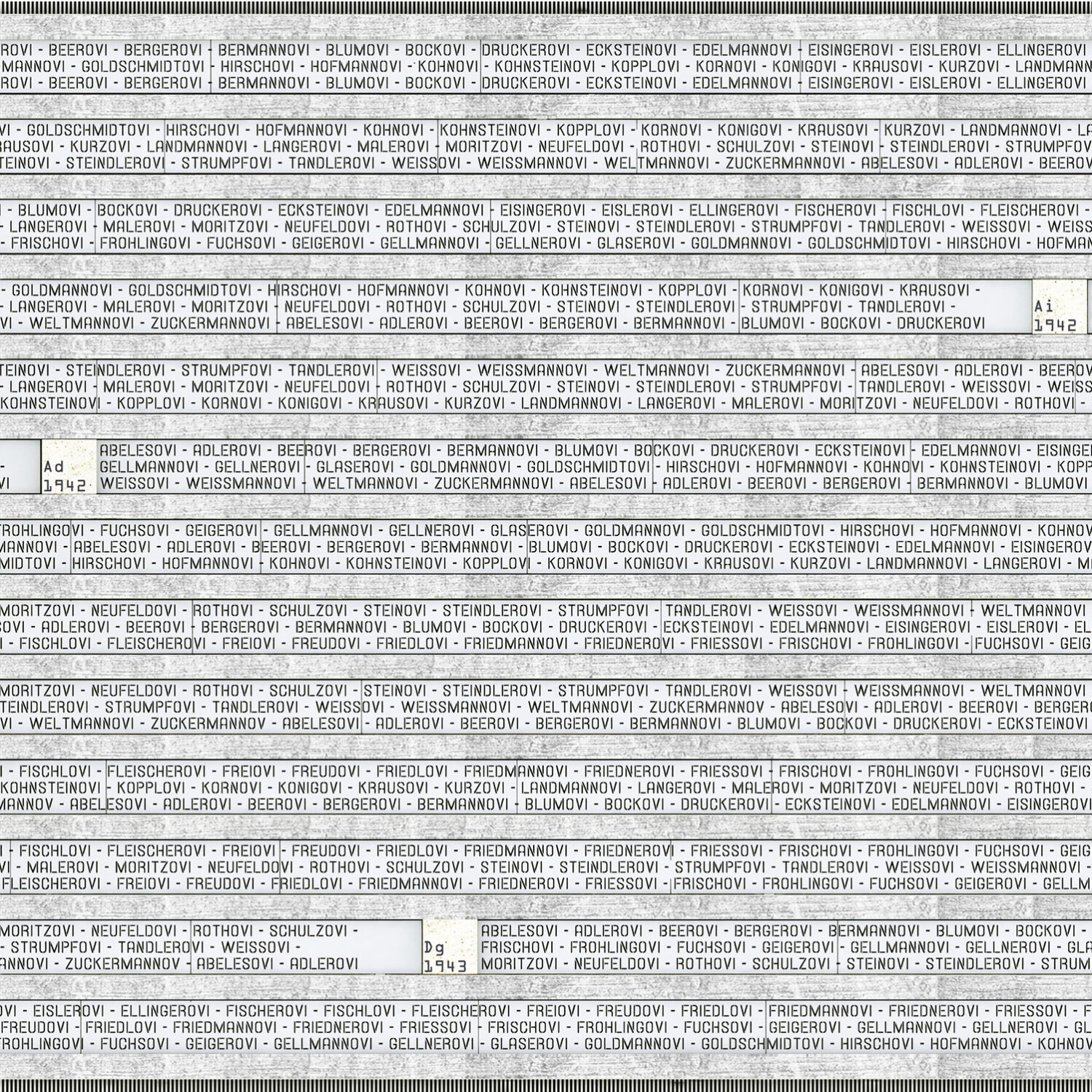
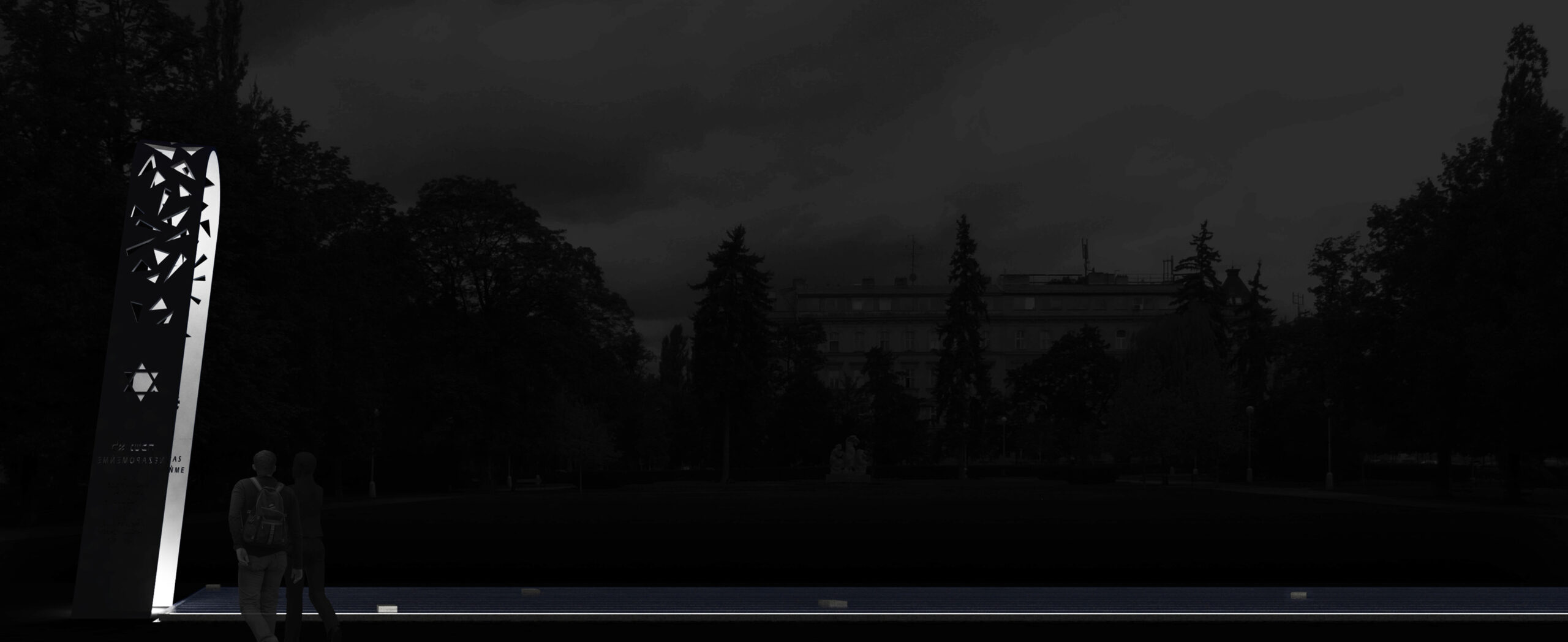
Seen from a distance, with detachment and apparent indifference, the view is veiled by the reflection of the water, in which the calm crowns of trees and the blue sky are mirrored. Only when we come closer and lower our heads to look directly down at the water does its reflectivity disappear… and the memorial becomes legible: a field of text covered with the names of Jewish and Roma families murdered during the Second World War. The interplay between the water’s surface and the vast text field, measuring 32 × 4.2 metres, creates an important effect that illustrates one of the central ideas: the context and sheer scale of the event are difficult to overlook, measure, grasp or comprehend. Although the observer stands very close, they can never see the ends of the text field as it disappears into the shimmering reflection of the landscape. The memorial is not anchored within its seemingly clearly defined boundaries; it plays with the observer and points to the uncertain nature of the limits of human understanding.
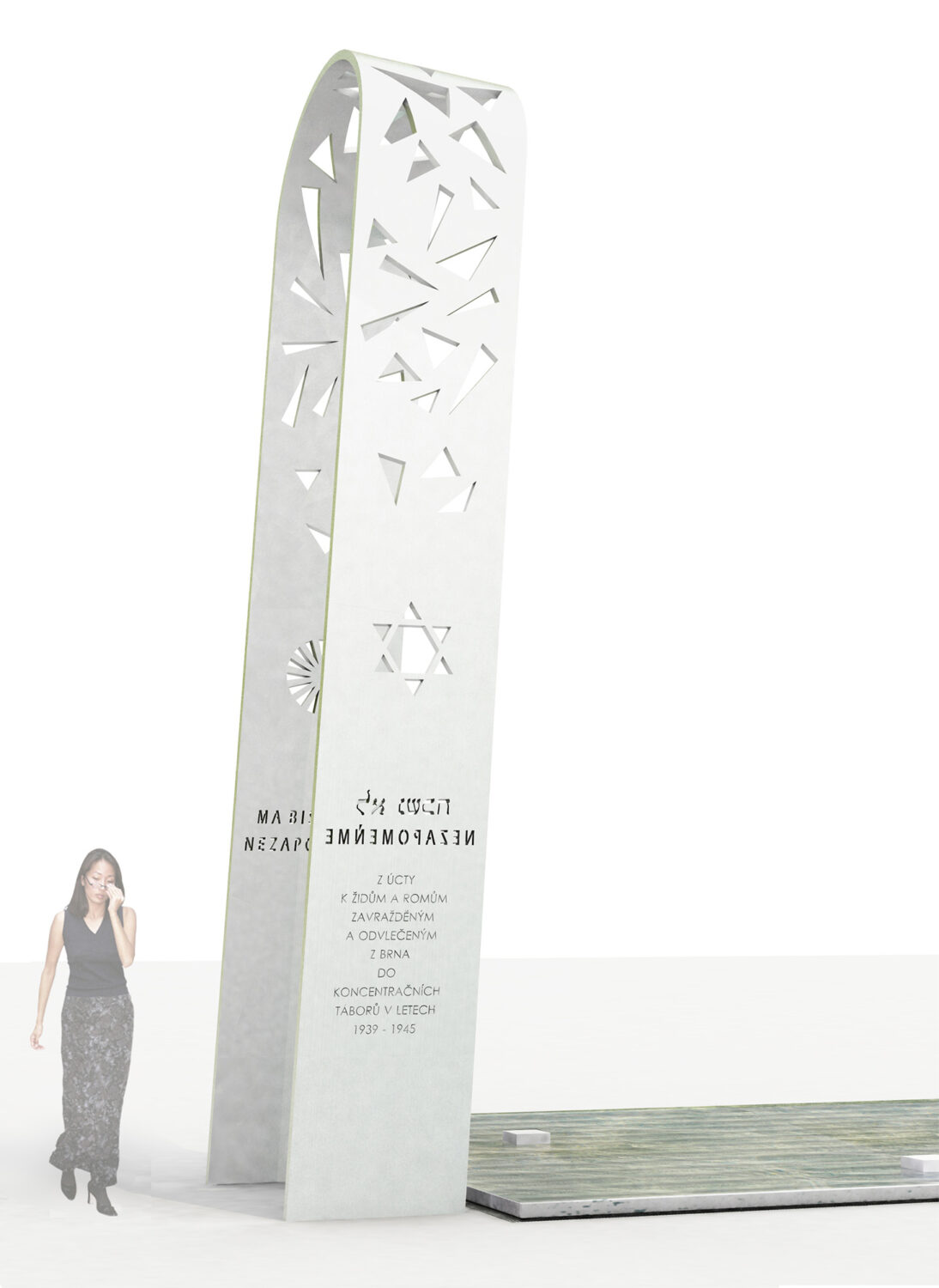
This unconventional element is complemented by an archetypal, classical one: a vertical marker in the form of a double stainless-steel stele, topped with a compressed arch and tilted away from the upright position. The archaic form of the arch refers, among other things, to historical associations with the subject. It may also recall the vaulted shape of tombstones, with which it shares a purpose – marking a place on earth, in this case marking the textual memorial submerged in the water.
Team: Roman Strnad, Ivan Řehák.